

Ingredient guide
Ingredient guide for men's daily formulas
This guide explains the vitamins, minerals, and herbal ingredients that appear most often in natural supplements for men sold in Indonesia. It is written for label reading, not for self-treatment. After reading it, you should be able to look at a supplement facts panel and understand what each line means.
We group ingredients by what they are, not by what a seller claims they do. Where an ingredient has a traditional-use reputation, we describe it as reputation, not as effect.
Eight ingredient groups, read the same way every time
Nothing below is a reason to take a product. It is a way to read one. Amounts, formats, and serving sizes change between labels, so the habit we teach here is comparison, not purchase.
B-complex vitamins and daily energy metabolism
B vitamins appear in nearly every men's multivitamin because they participate in normal energy metabolism. That phrasing is important: the body uses B vitamins in processes that convert food into usable energy, which is not the same as a B vitamin giving you energy directly.
Common members of the group include B1, B2, B6, B12, niacin, and folate. Amounts vary widely between products, and some imported multis list them at levels well above basic requirements. If a label groups all B vitamins under a single B-complex line without amounts, that is a transparency gap worth noting.
This is why men's vitamin formulas can look almost identical on the front of the bottle and differ a great deal inside. Energy and endurance formulas in particular lean on this group in their marketing, and the ingredient list is where you find out how much is actually there.
What to check on this line
- Amount per serving. A number in micrograms or milligrams, not just a name.
- Servings per day. Two or three tablets means the dose is split.
- Separate lines. B12 listed alone tells you more than a combined B-complex row.
- Missing units. No unit and no number means you cannot compare it to anything.

Vitamin D, calcium, and bone and muscle support
Vitamin D helps the body absorb calcium, and both appear frequently in men's formulas for that reason. In Indonesia, sun exposure is generally plentiful, which makes vitamin D dosing an individual question rather than a blanket one.
Calcium in a multivitamin is usually a modest contribution toward daily intake, not a full replacement for dietary sources. If a men's multi lists calcium, check the amount against the serving size. Many products split the dose across two or three tablets per day.
For men's health support aimed at everyday movement rather than training peaks, the useful question is simpler: is the vitamin D amount stated plainly, and does the serving size make sense for how you actually take the bottle?
Zinc and magnesium in men's blends
Zinc shows up in a large share of men's vitamin formulas and is associated with normal immune function and several enzymatic processes. Magnesium appears in blends aimed at general wellness and sometimes in products marketed around training.
Both minerals have tolerable upper intake levels, which is one reason ingredient amounts matter more than ingredient count. A formula with twenty minerals at low doses is not automatically more useful than a shorter list with clearly stated amounts.
Zinc
Nearly every men's daily multi, plus blends positioned around immune support and testosterone-adjacent marketing.
Elemental zinc in milligrams per serving, and whether it sits in one tablet or across several.
Magnesium
General wellness blends, and formulas positioned around training or evening routines.
The compound named (oxide, citrate, glycinate) alongside the elemental magnesium amount.
Both together
Men's blends that list a long mineral run under one line.
Separate amounts per mineral. A single combined figure hides the dose of every mineral in it.
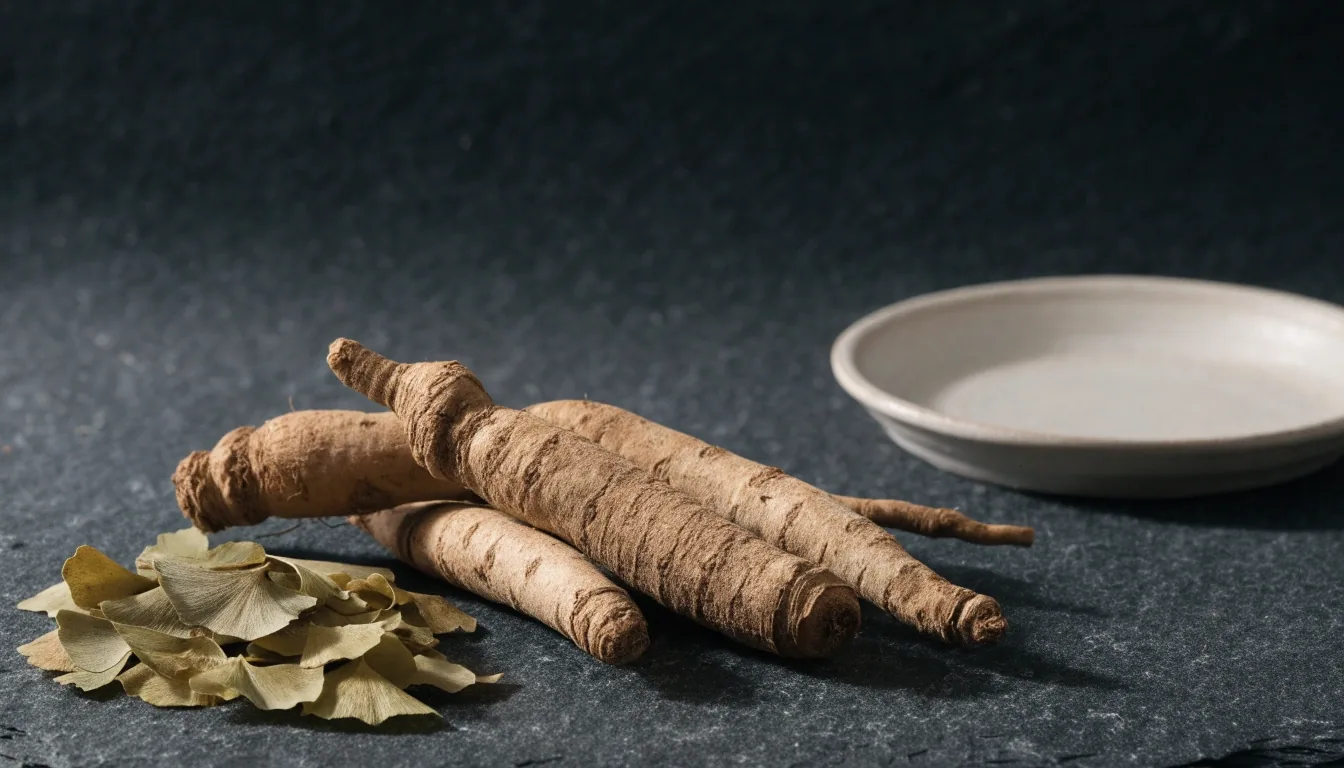
Ginseng root and ginkgo leaf, shown as they arrive in botanical ingredient lists — dried, ground, or listed by extract ratio.
Herbal ingredients: Panax ginseng and Ginkgo biloba
Herbal men's capsules in Indonesia frequently include Panax ginseng and Ginkgo biloba. Ginseng has a long traditional-use history in several Asian cultures and is commonly associated with vitality in on-label language. Ginkgo biloba is typically included in blends positioned around circulation and focus.
These are botanical ingredients with traditional-use context, not medicines. If a label presents ginseng or ginkgo as a treatment for a condition, that framing goes beyond what supplement labeling should say, and we would treat it as a warning sign.
One practical detail: herbal extracts vary by ratio and by part of the plant used. Root extract, leaf extract, and standardized extract are not interchangeable lines, even when the headline name is the same.
Epimedium and Pasak Bumi in botanical formulas
Some men's herbal capsules list Epimedium alongside Pasak Bumi, an ingredient familiar in Southeast Asian traditional use. Products containing this pair are usually positioned as men's vitality formulas and are often sold in smaller pack sizes such as 30 capsules.
Traditional-use context is not clinical evidence, and we do not present it as such. What we can say factually is that these herbs appear in on-label ingredient lists of herbal men's products sold through pharmacies and marketplaces in the region.
Before you compare these
- Check whether the pack states a botanical amount or only the herb name.
- Look for the plant part and extract ratio, not just the common name.
- Note the pack size against the expiry date on smaller herbal bottles.
Biotin and gummy formulations
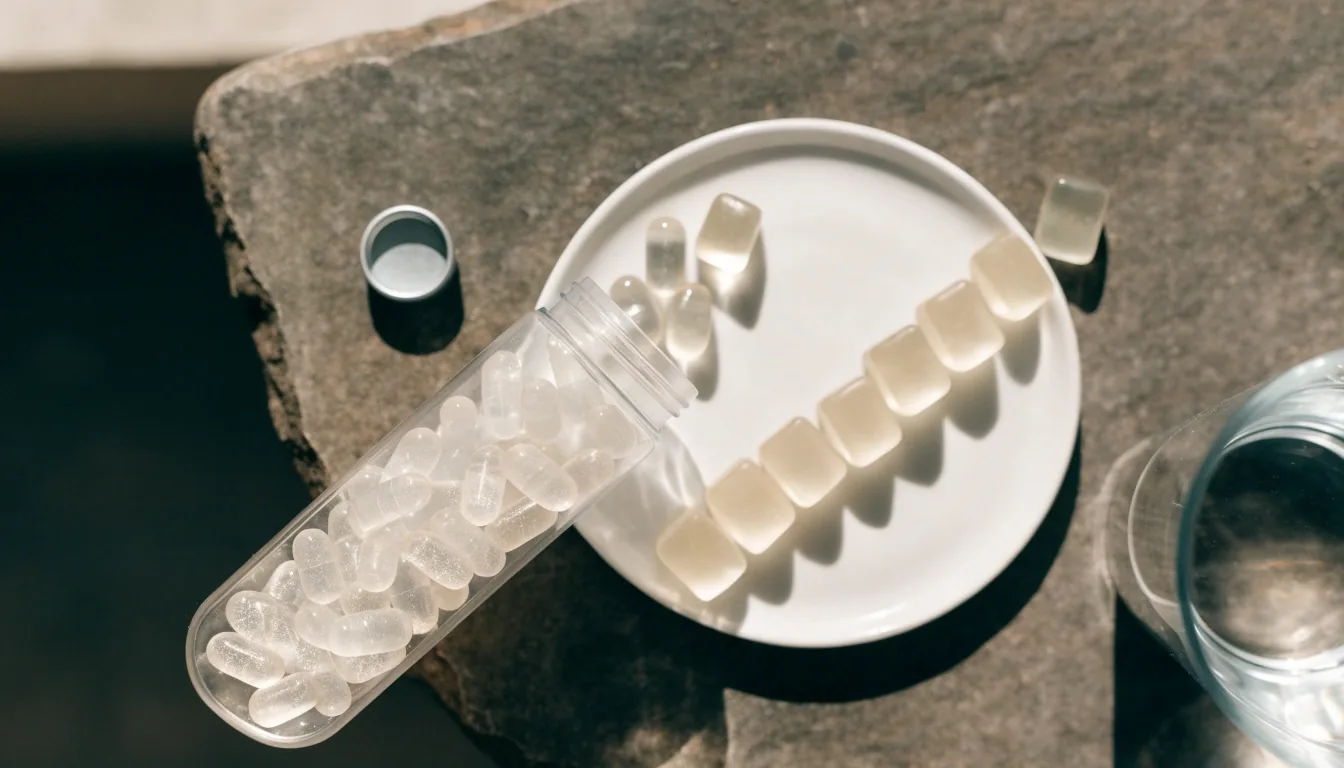
Biotin appears in gummy men's supplements, sometimes in the product name itself. It is a B vitamin, and gummies that feature it are usually positioned around everyday wellness rather than a specific function.
Gummies have a practical advantage: no swallowing difficulty. The trade-off is that gummy formulations often contain fewer ingredients than tablet multis and may include sugars or gelatin. Reading the full ingredient list, not just the headline vitamin, tells you which approach you are choosing.
What gummies change about the label
Usually shorter lists
Fewer vitamins and minerals per gummy than a comparable tablet multi, so the bottle often highlights one or two headline nutrients instead of a full panel.
Always read the base
Sugars, syrups, pectin, and gelatin sit in the ingredient list too. They decide texture and taste, and they change the daily sugar you are adding.
If you are comparing a gummy against a capsule, line up servings per day first. A gummy taken twice daily can reach a similar nutrient total from a shorter list.
Reading amounts versus ingredient counts
A marketplace snippet might highlight that a product contains 27 vitamins, minerals, and herbs. That number tells you the list length, not the dose. Two products with the same count can differ substantially in how much of each nutrient they deliver per serving.
The practical habit is to scan amounts column first, ingredient names second, and marketing claims never. If the amounts are missing or grouped without numbers, you cannot compare that product meaningfully against anything else on the shelf.
-
Step one
Find the serving size
One tablet, two tablets, or two gummies — the whole panel is measured against this, so nothing else makes sense until you have it.
-
Step two
Read the amounts, not the names
Go down the amount column first. Names with no numbers beside them cannot be weighed against another bottle.
-
Step three
Compare like with like
Put two panels side by side at the same serving size before deciding. Different serving sizes are the most common reason two bottles look comparable and are not.

Storage and stability basics
Indonesian humidity is hard on supplements. Gummies can clump, capsules can soften, and tablets can absorb moisture if the bottle is left open. A dry shelf away from the stove and bathroom is usually enough.
Check the expiry date when you buy, especially on smaller packs. A 30-capsule herbal product bought in bulk may expire before you finish it, which turns a reasonable purchase into waste. Storage is boring, but it decides whether the label's promises ever get a chance.
Questions that come up while reading labels
Short answers to the things readers ask most after working through the groups above. If your question is about a specific product line rather than a label, the comparison guide covers formats and serving sizes in more detail.
Browse the full FAQDoes a longer ingredient list mean a stronger formula?
No. List length shows how many names the maker included. Strength comes from the amount per serving, which sits in a separate column. Two products can both claim 27 ingredients and deliver very different amounts of each one.
Why do some panels use one combined row for several minerals?
It keeps the panel compact, and it also hides the individual doses. If you want to compare that product honestly against another bottle, a combined row leaves you without the numbers you need.
Are herbal capsules with ginseng or Epimedium the same as vitamins and minerals for men?
They are different kinds of products. A multivitamin lists vitamins and minerals with amounts. An herbal capsule lists botanical ingredients with traditional-use context. Both carry ingredient panels, and both should be read the same way — amounts first, claims last.
Should I treat this guide as advice for my own situation?
No. It is a reading guide for labels, not a personal recommendation. Anything specific to your health, medication, or daily routine belongs with a qualified professional, and dietary supplements are not medicines.

Next step: put two labels side by side
The comparison guide walks through formats, serving sizes, and what to look at when two men's vitamin formulas sit at the same price on the shelf. If a question is not covered here, our editorial team answers label questions by email during working hours.
MensBalance Wellness · Jl. Jenderal Sudirman No. 52, Jakarta 12190, Indonesia · [email protected] · Monday to Friday, 9:00 AM – 6:00 PM. Dietary supplements are not medicines and are not intended to diagnose, treat, cure, or prevent any condition.